Study areas · Engineering

Engineering & Technology Degrees in Germany

Explore engineering programmes in a country known for its manufacturing, mobility, energy, automation, and applied-research sectors. Compare study routes, understand typical admission requirements, and plan your next step with a clear view of language, costs, and practical experience.

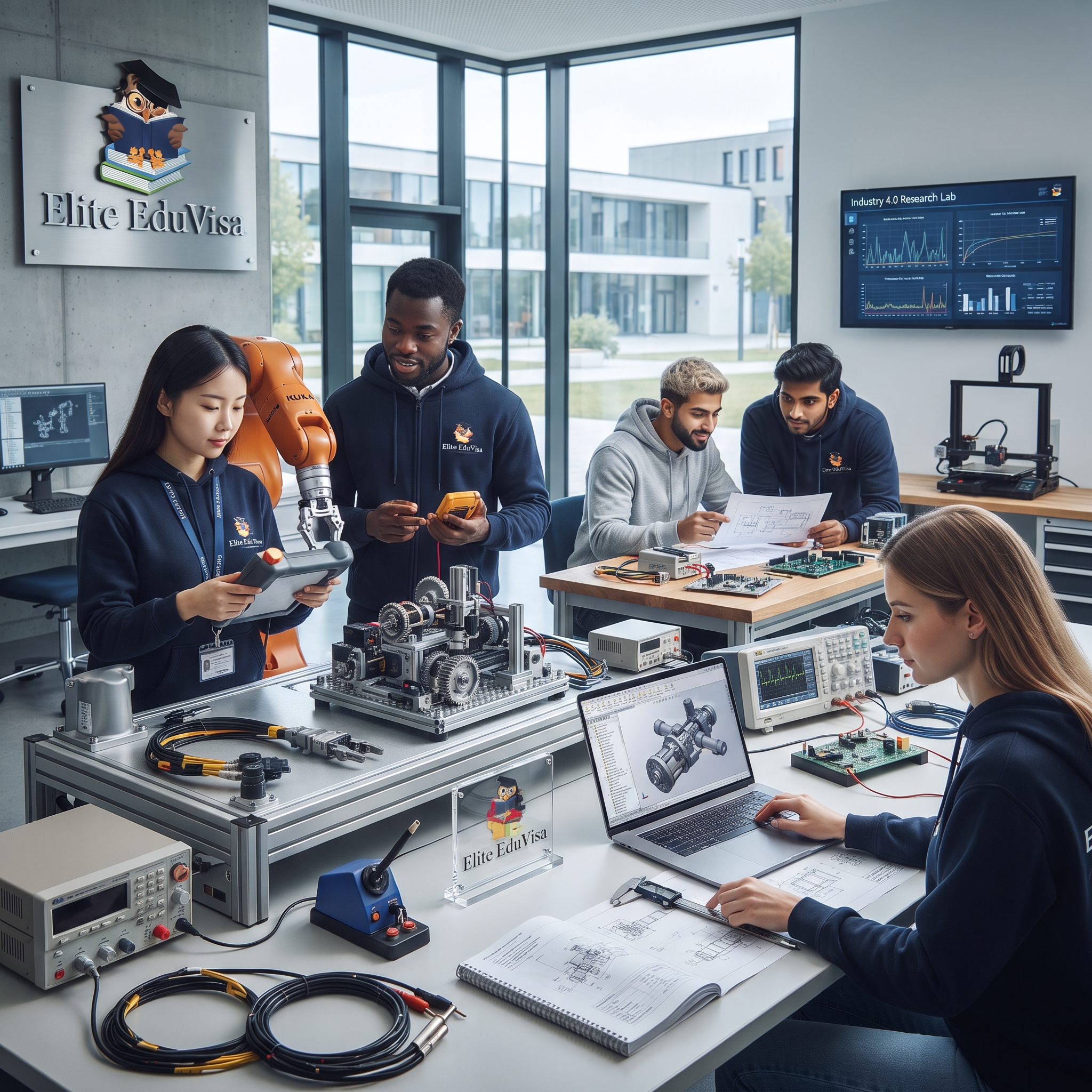
Engineering and robotics technology in a modern technical environment
Your subject guide

Why consider engineering and technology in Germany?

Engineering connects scientific principles with the design, testing, operation, and improvement of real systems. German universities and universities of applied sciences offer different ways to study these subjects, from research-oriented theory to project-based learning with practical components.

Germany has a long industrial and engineering tradition across automotive manufacturing, mechanical systems, electrical equipment, rail and transport, renewable energy, industrial automation, and production technology. This makes it a useful place to investigate if your interests involve building products, improving processes, designing machines, or making complex systems more efficient. The right programme, however, is the one whose curriculum matches your preparation and goals—not simply the one with a well-known university name.

Programme structure matters. A mechanical engineering degree may emphasise design, materials, thermodynamics, and manufacturing. Mechatronics combines mechanical engineering with electronics, control systems, and software. Electrical engineering may focus on circuits, power systems, communications, or embedded systems. Industrial engineering typically combines technical foundations with business, logistics, or operations. Read module handbooks and semester plans to see what students actually study.

Germany is not one single admissions system. Requirements differ by institution, degree level, programme, and applicant background. Some courses have restricted admission or selection procedures; others assess whether applicants meet formal subject and qualification requirements. Application portals, deadlines, language evidence, and document formats also vary. Use official university pages as the final source of truth before applying.

Planning reminder: A programme being offered by a public university does not automatically mean every student pays no tuition. Check tuition rules, semester contributions, state-specific exceptions, and your personal student category.
Choose a specialisation

Engineering fields to explore

Compare subject content before choosing a degree. Similar course titles can have different emphases, and one university's specialisation may be another university's elective or master's track.

01 · Mechanical

Mechanical Engineering

Often covers mechanics, materials, thermodynamics, fluid systems, product design, simulation, manufacturing, and machine elements. It can suit students interested in physical products, equipment, production systems, and technical problem-solving.

02 · Electrical

Electrical Engineering

May include electronics, electrical machines, power engineering, control, communications, signal processing, and embedded systems. Check whether the course is oriented toward energy, electronics, automation, or communications.

03 · Mechatronics

Mechatronics & Robotics

Brings together mechanics, sensors, actuators, electronics, programming, and control theory. Look for laboratory access, robotics projects, automation modules, and the balance between hardware and software.

04 · Automotive

Automotive & Mobility

Can cover vehicle design, powertrains, electric mobility, battery systems, vehicle dynamics, manufacturing, and transport technologies. Review how much the programme addresses electrification, software, and sustainable mobility.

05 · Industrial

Industrial Engineering

Often combines engineering with operations, supply chains, production planning, quality, logistics, or management. Compare the technical and business module balance to make sure it fits your intended career direction.

06 · Energy

Energy & Environmental Technology

May address renewable energy, energy conversion, electrical grids, efficiency, environmental systems, or sustainable industrial processes. Check laboratory, modelling, and project opportunities relevant to your interests.

Find the right institution

University or university of applied sciences?

Germany has several types of higher-education institutions. Traditional universities often place greater emphasis on scientific foundations and research, though their programmes can also include substantial practical work. Universities of applied sciences—often called Hochschulen für angewandte Wissenschaftenor Fachhochschulen—typically place a strong emphasis on applied learning, projects, laboratories, and practical problem-solving. These are broad tendencies, not rules that describe every programme.

When comparing institutions, review the actual curriculum, laboratory facilities, research groups, industry projects, internship arrangements, and the qualifications awarded. Also check whether the degree meets the prerequisites for your next step, particularly if you plan to progress to a specialised master's programme or a research career. Accreditation, recognition, and programme-specific requirements should be verified directly with the institution.

What to compareResearch-oriented universityUniversity of applied sciences
Learning emphasisOften stronger focus on theory, scientific methods, and research foundations.Often stronger focus on applied projects, practical problem-solving, and professional contexts.
Engineering facilitiesMay offer specialised research labs, institutes, and advanced experimental facilities.May emphasise teaching labs, prototyping, applied research, and industry-linked projects.
Best comparison methodRead research areas, module descriptions, and opportunities to join research projects.Read practical modules, project formats, internship rules, and company collaboration details.
Important cautionPractical learning varies by degree and department.Research opportunities and theoretical depth also vary by degree and department.

For a more detailed comparison, visit our public vs. private universities guide. Remember that public/private status and university/applied-sciences type are two different comparisons; one describes funding and ownership, while the other describes institutional orientation.

Admission preparation

What do you usually need to apply?

Use this as a preparation checklist, not a universal list of requirements. Each programme publishes its own entry criteria and accepted evidence.

For a bachelor’s degree

  • A school-leaving qualification that meets the relevant university-entry rules.
  • Subject preparation, especially mathematics and relevant sciences, where required.
  • Proof of German or English proficiency matching the programme's language of instruction.
  • Academic transcripts, certificates, and any required certified translations.
  • Additional assessment, preparatory study, or a foundation route if your qualification requires it.

For a master’s degree

  • A relevant first degree with the required academic level and subject coverage.
  • Evidence of specific credits or modules, such as mathematics, mechanics, programming, or electronics.
  • Required grade average or other selection criteria, if applicable.
  • Language certificates, CV, motivation letter, or references where requested.
  • Portfolio, project evidence, aptitude assessment, or work experience only where specified.

Do not assume that a degree with a similar name automatically qualifies you for a master's programme. Admissions teams may compare transcript content and credit points against required modules. Before applying, make a simple mapping between your previous coursework and the programme prerequisites. If a requirement is unclear, ask the university in writing and keep its response for your records.

Start early enough to request transcripts, degree certificates, translations, and language test results. Some institutions use their own application portals; others may use an external application service for particular applicants or programmes. Follow the process stated on the official programme page rather than assuming one application method works for every university.

Budget and language

Plan costs, language, and everyday study life

Build a realistic budget before you apply. Potential costs include tuition where charged, semester contributions, rent, food, transport, health insurance, study materials, and personal expenses. Costs vary by city, housing arrangement, institution, and individual circumstances. Check the university's published fee information and use official sources for current living-cost and residence requirements. Do not rely on a general statement that studying in Germany is free.

Language is another central decision. A programme taught in English may require an accepted English-language certificate, while a German-taught programme normally requires evidence of German at the level specified by the institution. Even when your classes are in English, German can be valuable for daily life, student jobs, project teams, internships, and communication with employers. Check the exact certificate types, minimum scores, exemptions, and deadlines for your course.

Engineering study often includes group projects, technical reports, laboratory sessions, presentations, and independent preparation. Build evidence of your interest before applying: personal projects, relevant coursework, practical training, competitions, or work experience can help you explain why a particular specialisation fits your goals. Include such evidence when the application allows it, but do not send unsolicited documents if the institution explicitly limits submissions.

Career planning

Connect your degree to practical experience

Treat career planning as part of your study decision. Look at the skills employers request and work backwards to the modules, projects, and experience you want to build.

Build technical evidence

Keep a record of projects, laboratory work, CAD models, prototypes, simulations, programming assignments, and measurable improvements. Describe your own contribution clearly and follow university rules on sharing coursework.

Explore internships

Check whether a programme includes a practical semester or internship and learn how placements are arranged. If you seek experience independently, review the rules that apply to your residence status and student employment before accepting paid work.

Develop communication skills

Technical competence is important, but engineers also explain trade-offs, document tests, coordinate with teams, and communicate risks. Practise technical writing and continue learning German if you plan to work in German-speaking teams.

Potential career directions depend on your specialisation and experience. Graduates may investigate roles in design and development, production engineering, testing, quality, automation, embedded systems, energy technology, project coordination, or applied research. These are examples rather than promises of employment. Eligibility for a role and the availability of jobs depend on the employer, market conditions, language requirements, work authorisation, and the skills you can demonstrate.

Frequently asked questions

Engineering studies in Germany: FAQs

Is Germany a good destination for engineering studies?

Germany has a substantial engineering and manufacturing sector and offers a broad range of engineering programmes. Whether it is the right destination for you depends on the curriculum, language of instruction, admission requirements, budget, and your career goals.

Are engineering degrees in Germany taught in English?

Some programmes, especially at master's level, are taught in English, while many bachelor's programmes are taught in German. Always check the exact language requirements on the official programme page; an English-taught course may still involve German-language expectations for daily life or internships.

Do public universities charge tuition fees?

Many public universities charge no general tuition fee for some programmes, but semester contributions apply and exceptions exist. Fees can depend on the federal state, university, degree, and student category. Confirm the current costs directly with the institution.

Can I apply for a master's degree in engineering?

Usually, applicants need a recognised bachelor's degree in a relevant field and must meet programme-specific subject, grade, language, and document requirements. Some programmes require particular mathematics or engineering modules, so a degree title alone does not guarantee eligibility.

Will studying engineering guarantee me a job in Germany?

No degree can guarantee employment. Relevant technical skills, internships, project experience, language ability, networking, and the state of the labour market all affect job prospects. Research roles and employers early and build practical experience during your studies where permitted.

Ready to shortlist engineering programmes?

Compare the course content, entry requirements, language, deadlines, and total budget before you apply. Elite EduVisa can help you organise your study plan and understand the next steps; final admission decisions remain with the universities.

Book a Consultation