
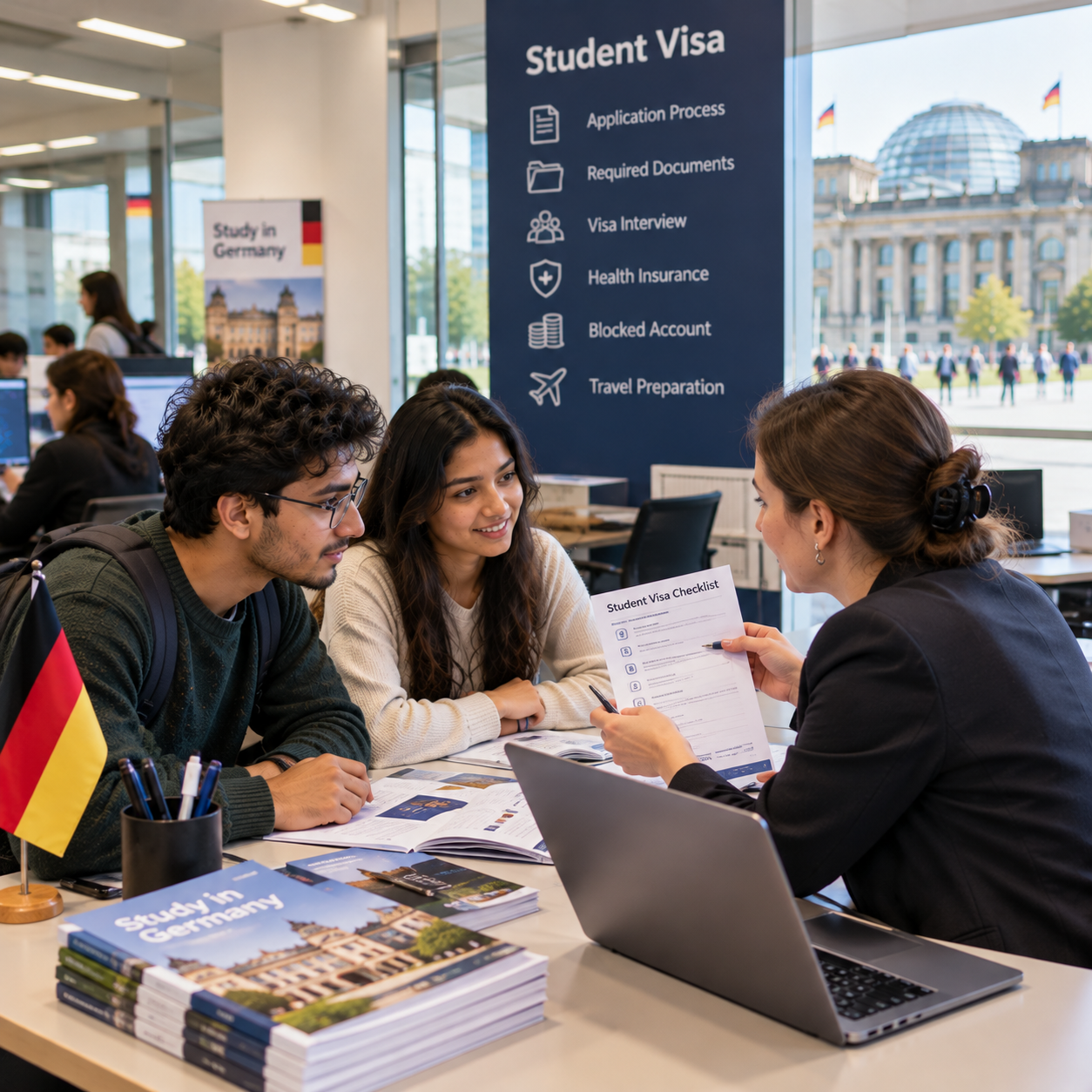
Your Germany Journey Starts Here
Study. Work. Build your future in Germany.
Elite EduVisa provides structured guidance for university admission, Germany visa pathways, professional routes and the practical steps around your move. Start by understanding your options and organising the information you need to make informed decisions.
Clear information. Practical preparation. Personal guidance.
EducationVisa guidanceCareer pathwaysRelocation preparation
Our Expertise
Make your Germany plan clearer, one decision at a time.
Moving to Germany for education or work can involve several connected decisions. You may need to compare study programmes, check entry requirements, prepare documents, understand a visa route and plan practical matters such as housing and insurance. When these tasks are considered separately, it can be difficult to see what should happen first.
Elite EduVisa helps you organise those questions into a more manageable process. We focus on explaining the general pathway, identifying the requirements you should verify and helping you prepare for the next relevant step. The aim is not to promise a particular result; it is to help you approach your plan with clearer information and better organisation.
Our Expertise
Germany-focused services
Explore the areas where structured guidance can help you prepare, from choosing a route to organising documents and planning arrival.
02
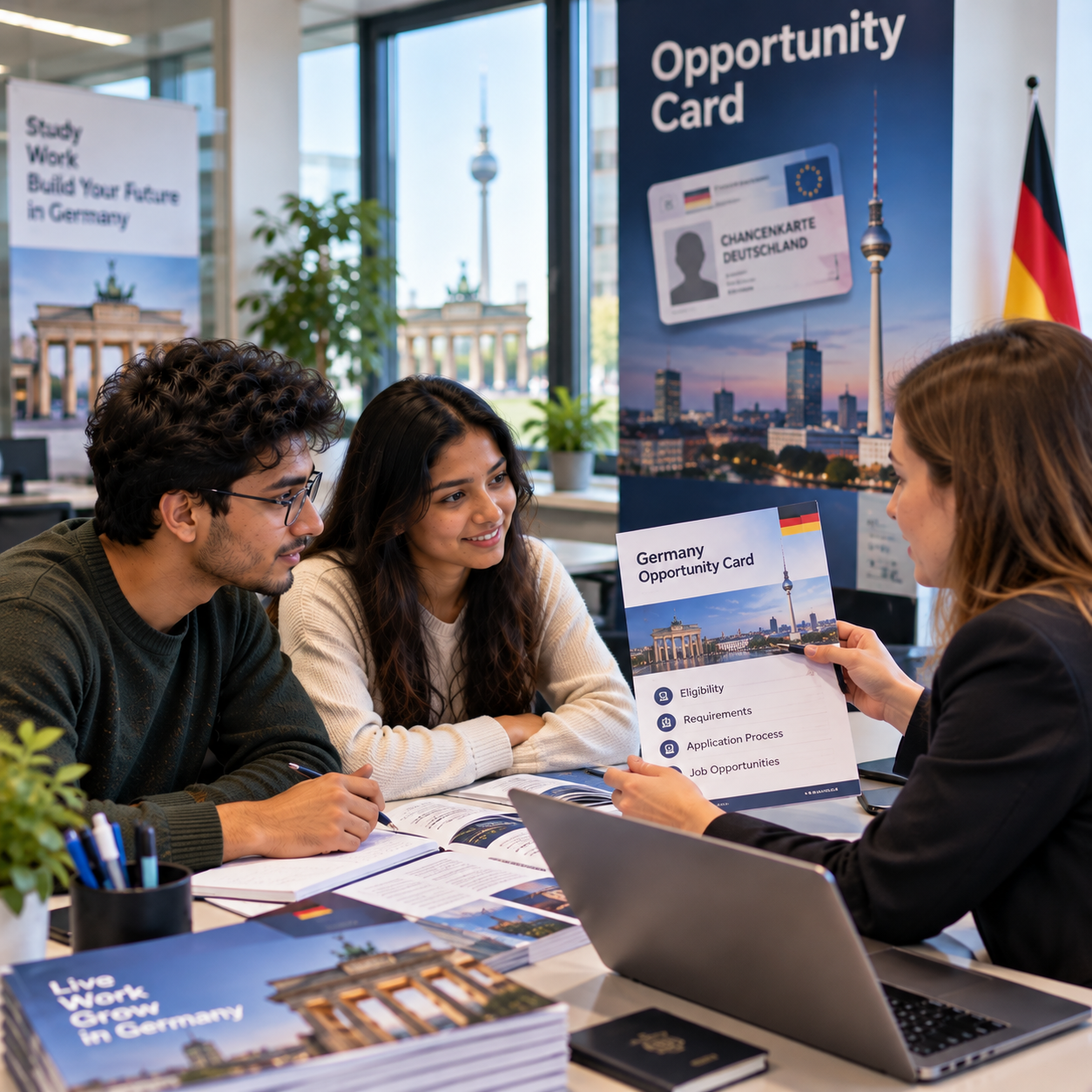
Germany Opportunity Card
Support for professionals exploring qualified employment in Germany.
Learn more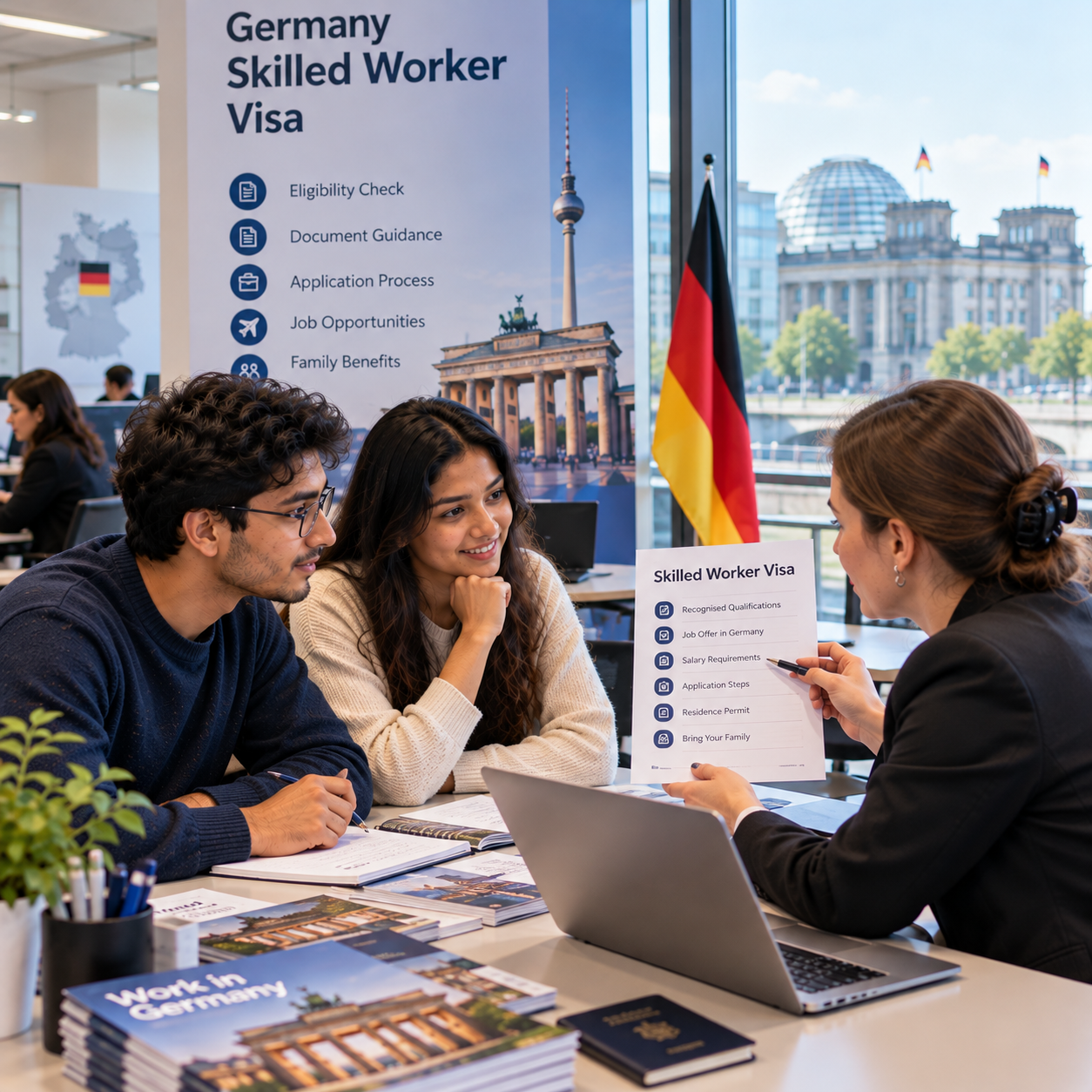
03
Germany Skilled Worker Visa
Application guidance for qualified professionals with a German employment pathway.
Learn more
04
University Admission
Course and university application support from shortlist to submission.
Learn more06
Visa Consultation
A structured consultation to understand your route, documents and next steps.
Learn moreWhy Elite EduVisa
A clearer process for a major life decision.
Your Germany plan involves many moving parts. We bring education, visa preparation and practical planning into a workflow that helps you understand what is relevant now and what may come later.
Pathway planningDiscuss the route that may fit your goals and profile, then identify the official criteria that need to be checked.
Document guidanceOrganise application evidence, identify missing information and keep track of the items that still need attention.
Germany-focused supportConsider admission, visa and relocation tasks together so that important dependencies are easier to recognise.
 For applicants and students
Keep your next steps organised.
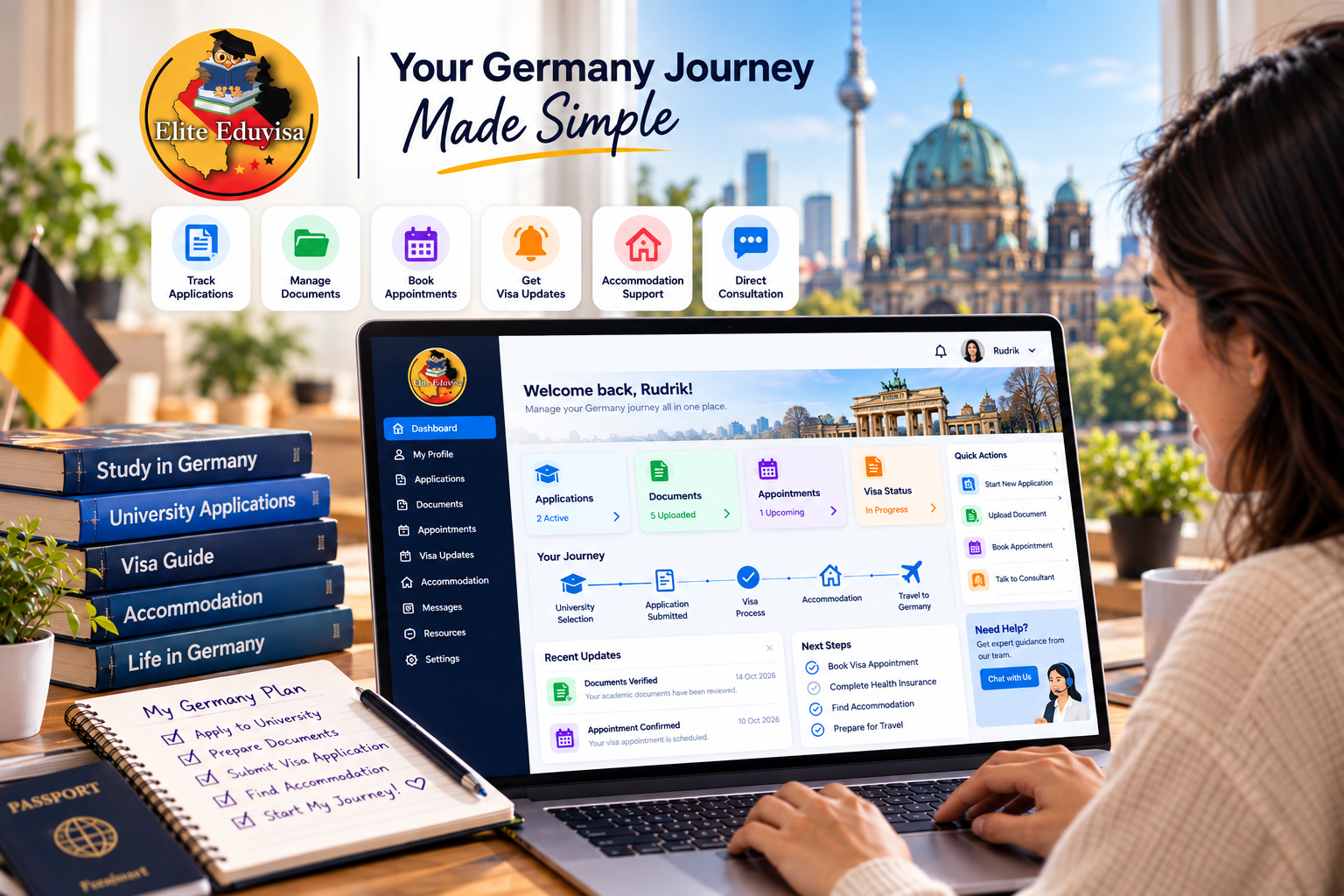
The Student Portal is intended to give registered students a dedicated place to upload documents, review checklist progress, view application status and receive process updates when those features are available for their account.
Open Student PortalPlease use the portal only if you have an account. Do not send passwords or sensitive personal documents in public messages.
Study in Germany
Explore our study guides and university resources.
Start with the overview that matches your plans. Each guide introduces the topic and helps you identify the admission, academic, language or planning details to verify before taking your next step.
Study in Germany
Get an overview of study options, planning considerations and the steps involved in preparing for education in Germany.
Read moreStudy Areas
Browse subject areas and compare the kinds of programmes that may fit your interests and previous education.
Read moreEngineering & Technology
Explore engineering, mechatronics and technology-related study pathways, including practical and subject prerequisites.
Read moreComputer Science & IT
Review computing, software and IT-related degrees and check mathematics, programming and language expectations.
Read moreBusiness & Management
Learn about business, management and economics programmes and the entry conditions that can differ by course.
Read moreData Science & AI
Explore data-focused degrees and the importance of mathematics, statistics, programming and relevant prior study.
Read moreLife Sciences & Biotechnology
Discover biology, biotechnology and laboratory-oriented fields, with attention to science prerequisites.
Read moreMedicine & Healthcare
Understand why healthcare programmes can have specific admission, language and capacity requirements.
Read moreBachelor’s Degrees
Review undergraduate study planning, school-leaving qualifications and programme-specific eligibility checks.
Read moreMaster’s Degrees
Explore postgraduate study planning, subject alignment, previous-degree requirements and application preparation.
Read morePublic vs Private Universities
Compare institutional types, fees, programme recognition and other factors to check before deciding.
Read moreUniversity Admissions
Follow a practical overview of eligibility, documents, language evidence, application routes and deadlines.
Read moreHow It Works
Four practical stages
Your individual process will depend on your goal, eligibility and the requirements of the relevant institution or authority.
01
Consultation
Discuss your goals, background, current situation and preferred route. Use the conversation to identify the questions that need to be answered first.
02
Pathway planning
Organise the next steps around your profile, shortlist suitable options and create a practical document checklist.
03
Application preparation
Review the relevant requirements, organise supporting evidence and prepare for the applicable university, employer or visa process.
04
Next-step coordination
Keep track of outstanding documents, official deadlines and practical tasks that may follow an application or decision.
Explore Your Options
Start with the route closest to your goal.
You do not need to know every detail before you begin. Use these starting points to learn the basics and prepare the questions that matter to your situation.
Planning to study?
Compare study levels and subject areas, understand how admission requirements vary and check the language, academic and financial conditions for the programme you want to pursue.
Explore study in GermanyConsidering work?
Review the general purpose of professional routes, including the Skilled Worker Visa and Opportunity Card. Qualification, recognition, job status and other criteria can affect eligibility.
Explore work pathwaysNeed help preparing?
Create a clearer view of the documents, deadlines and practical tasks connected with your route. Use a consultation to prioritise questions and understand which requirements to verify officially.
Discuss your planPlan With Care
Important details deserve an official check.
Requirements can change, and they are not identical for every applicant. A university may set programme-specific admission conditions; a visa route may have separate eligibility and evidence requirements; and housing, insurance or financial arrangements can depend on individual circumstances.
Before paying fees, making travel arrangements or relying on a deadline, verify the current information with the relevant university, German mission, immigration authority or official service provider. Keep copies of submitted documents and note the date and source of important information.
Read our guidesA useful starting checklist
Define your primary goal and preferred timeline.
Collect your education or professional history.
List questions about eligibility and recognition.
Check language and financial requirements.
Confirm official deadlines and application channels.
Plan practical needs such as housing and insurance.
Build a Strong Foundation
Good preparation begins before an application.
A successful plan starts with accurate information about your own circumstances. For study applicants, this may mean reviewing the school-leaving certificate or previous degree, the subjects studied, grades, language level and any programme-specific prerequisites. For professional applicants, it may involve understanding the qualification held, the work experience available, whether a qualification needs recognition and whether a job offer is relevant to the route being considered.
It is equally important to plan realistically. Make a list of the steps that must happen before you can submit an application, and distinguish those from tasks that can be completed later. Some universities have fixed application windows; others use different deadlines for different programmes or applicant groups. Visa appointment availability, document certification, translations and processing times can also affect a timeline. Do not rely on a general estimate when an official deadline or individual appointment is involved.
Financial planning should be part of this early review. Consider application fees, document costs, travel, tuition or semester contributions where applicable, living expenses, insurance and accommodation. The requirements differ according to the route and personal situation, so confirm current amounts and acceptable evidence with the responsible institution or authority before transferring money or making commitments.
Language preparation is another useful part of the foundation. English-taught programmes may still involve German-language needs for daily life, internships or future employment. German-taught programmes and many jobs can require a specific level of German. Check the exact requirement rather than assuming that one language level applies everywhere. A clear checklist helps you see which evidence you already have, what needs updating and what still needs to be obtained.
A More Organised Process
Keep your decisions, documents and deadlines connected.
When several organisations are involved, a simple record of your progress can prevent confusion. Keep a secure folder for documents, use consistent file names, and maintain a written list of important dates and follow-up actions.
Organise your evidence
Separate academic records, identity documents, language evidence, employment records and financial documents into clearly named folders. Check whether copies, certified copies, translations or a particular document format are required before submission. Requirements can differ by university, authority and application route, so use the relevant checklist as your source of truth.
Track the next action
Record what has been completed, what is waiting for a response and what you need to do next. Save submission confirmations and note the official contact channel for each application. If an institution asks for additional information, check the request carefully and respond through its stated process by the deadline.
Ask focused questions
A consultation is more useful when you can explain your goal, current qualifications, timeline and main uncertainties. Prepare the questions you need answered, and identify which points require confirmation from a university, employer, German mission or immigration authority. This makes the discussion more practical and helps separate general guidance from official decisions.
Frequently Asked Questions
Questions to consider before you begin.
These general answers can help you prepare. Your own requirements should always be checked against the relevant official information.
Who can contact Elite EduVisa?
International students, graduates and skilled professionals who are exploring education, visa or relocation options connected with Germany can contact Elite EduVisa to discuss their goals and questions.
Can you guarantee admission or a visa?
No. Admission decisions are made by universities and visa decisions are made by the competent authorities. We provide guidance and preparation support, but cannot guarantee an outcome.
What should I prepare before a consultation?
Bring a clear idea of your goal, your current education or professional background, your intended timeline and any questions you already have. If available, keep relevant certificates or documents nearby; share personal documents only through an appropriate, secure channel.
Do all public universities in Germany charge no tuition?
No single rule applies to every programme and student. Fees can depend on the federal state, university, degree, programme and applicant circumstances. Always confirm current costs directly with the university.
Do I need German language skills?
It depends on the programme, employer and route. Some courses and jobs use English, while others require German at a specified level. Check the exact language requirements of each institution or opportunity.
Can you help after I receive admission or a visa?
Depending on the service you need, preparation may also include practical next steps such as reviewing enrolment tasks, planning accommodation, understanding insurance requirements and organising arrival-related checklists.
About Elite EduVisa
Guidance that starts with your circumstances.
No two applicants have exactly the same background, budget, qualifications or timeline. Our approach begins by understanding what you want to achieve and which details may affect your route. From there, the focus is on practical preparation: clarifying questions, organising documents, reviewing next steps and identifying where official confirmation is necessary.
Whether you are researching your first degree, considering a postgraduate programme, exploring professional opportunities or preparing to relocate, use the information on this website as a starting point—not as a substitute for decisions by universities or public authorities.
Learn more about Elite EduVisaReady to plan?
Start with a structured consultation.
Tell us where you are today and what you hope to achieve in Germany. We can use the conversation to organise your questions, discuss relevant pathways and outline the next steps you should verify.